Dewpoint Measurement in Natural Gas
Why Moisture is the Impurity You Can’t Afford to Ignore in Natural Gas
If you work anywhere along the natural gas value chain — production, processing or pipeline transport — you already know water is a problem but it’s worth being specific about why. The failure modes it causes are some of the most expensive and disruptive that an operator will face.
Four Ways Moisture in Natural Gas Causes Real Damage
Left unchecked, water vapour condenses out of the gas stream. That single event sets off a chain of problems.
Corrosion – Natural gas often carries trace CO₂ and sometimes H₂S in sour service. When free water condenses in their presence, it forms corrosive compounds. These attack carbon steel from the inside. Over time, that slow, invisible damage forces an unplanned pipeline inspection or repair.
Hydrate blockages – Line pressure and temperature swings are typical of transmission systems. Under these conditions, water and hydrocarbon molecules can lock together into solid, ice like hydrates. These lodge in valves, orifice plates and instrumentation. As a result, they can block the flow at a compressor station or metering skid entirely.
Reduced gas quality – Water vapour displaces hydrocarbon content. This lowers the delivered heating value of the gas. So a buyer may receive less energy content than they are paying for — even when nothing downstream has visibly failed.
Custody transfer disputes – Pipeline contracts set a maximum water content limit, typically 1 to 7 lb/MMSCF, at the point where ownership changes hands. If gas arrives wetter than the tariff allows, the receiving pipeline can reject it. That can trigger a commercial dispute between shipper and pipeline.
Where Water Dewpoint in Natural Gas Gets Checked
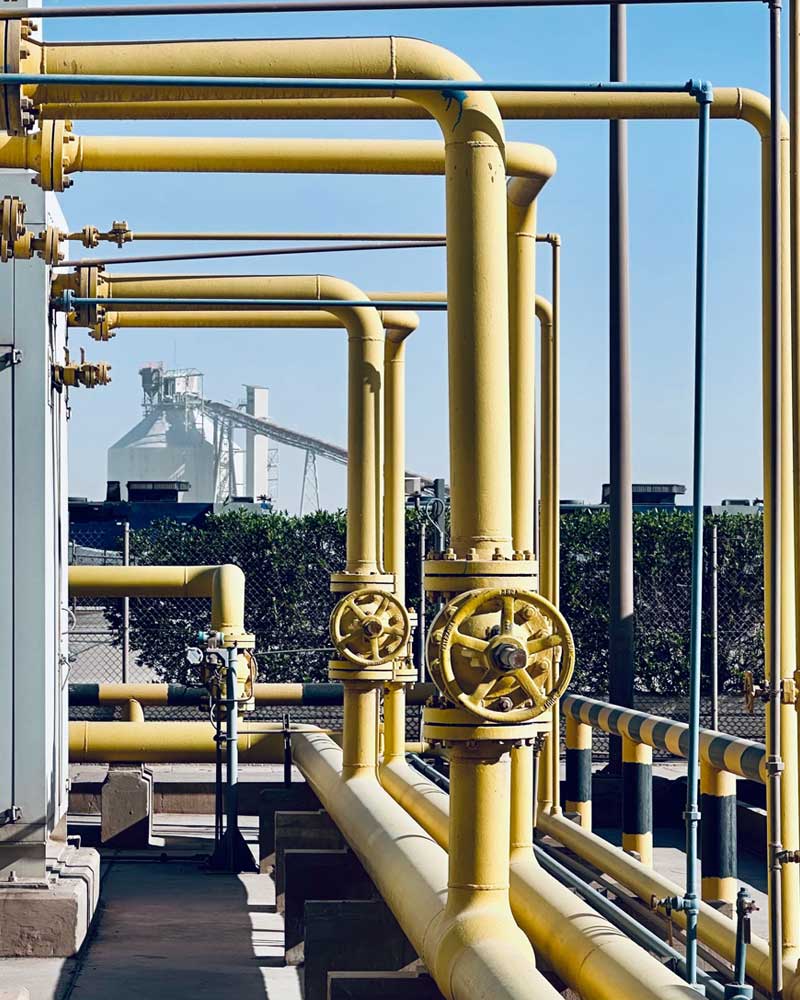
Operators typically measure water dewpoint at two key points. First, at the dehydration unit outlet — this confirms the glycol contactor or molecular sieve bed, is hitting its target. Second, at the custody transfer point — this confirms the gas still meets tariff after transport.
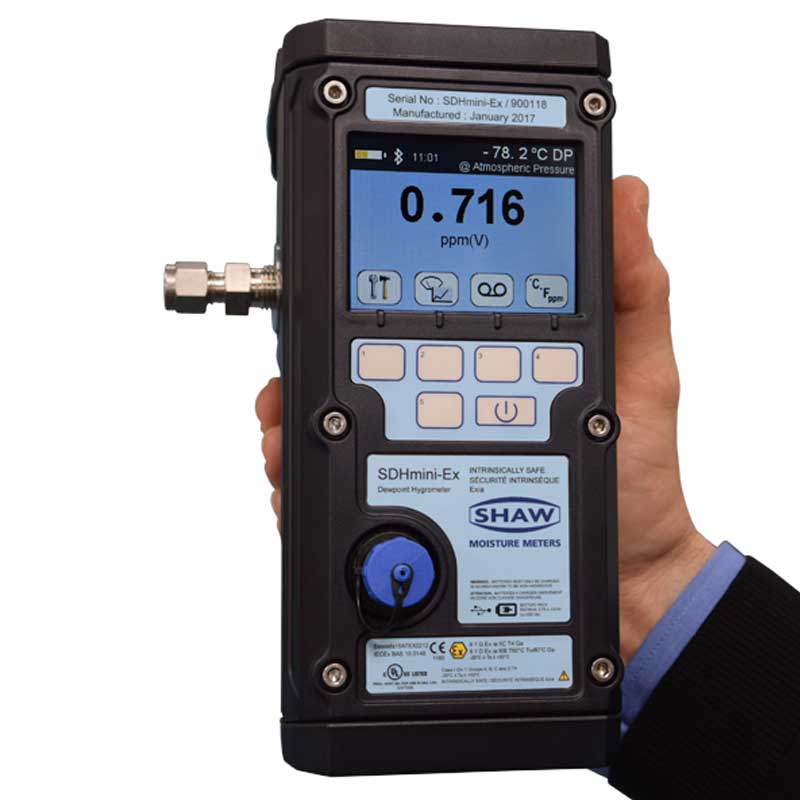
Portable dewpoint meters also play a role at remote or unmanned stations. Here, technicians can verify dewpoint during commissioning or troubleshooting, without needing a permanent transmitter at every tap.
A Measurement Mistake Worth Avoiding
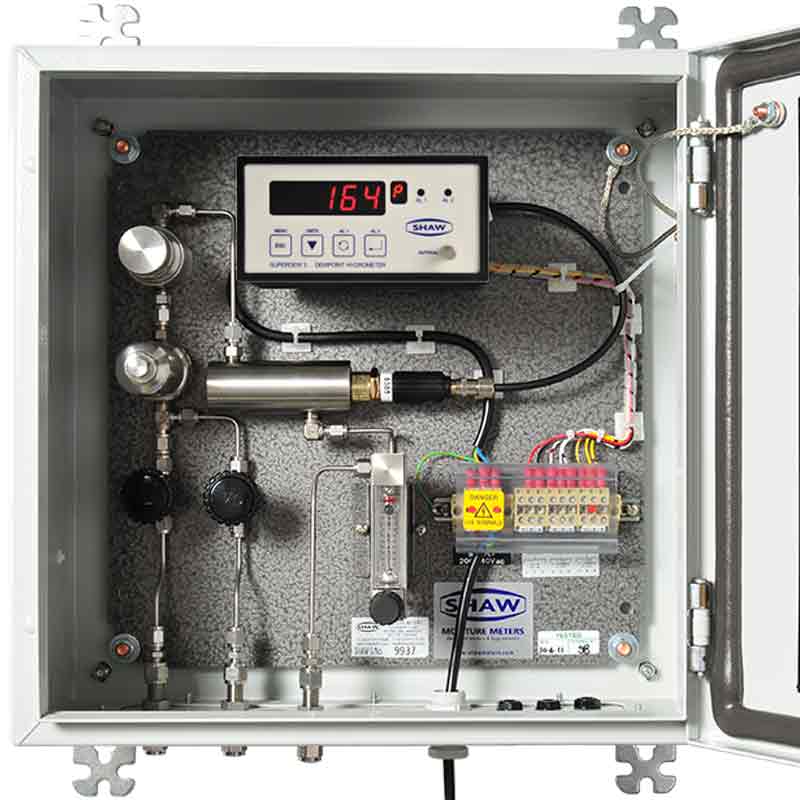
Here is one of the fastest ways to get a false reading: sampling straight off an unconditioned high pressure line. Stepping gas down to sensor pressure, cools it. Unless the pressure reduction stage is heated, the sample can fall through its own dewpoint before it even reaches the sensor. As a result, the reading shows condensation that was never actually present in the pipeline. A proper sample system, with a heated regulator, filtration and controlled flow, exists specifically to prevent this.
It is also worth keeping the following two measurements separate: water dewpoint and hydrocarbon dewpoint. Water vapour condenses in one; heavier hydrocarbons condense via retrograde behaviour in the other. Because they are different phenomena, a dewpoint transmitter is not a substitute for tracking hydrocarbon liquid dropout.
Applicable Standards
Accurate dewpoint measurement keeps a natural gas system free from corrosion, hydrate blockages and tariff disputes. The key is taking the measurement in the vapour phase with a properly conditioned sample. Get the sampling right and you can trust the reading at every point it’s taken.
Read the full application note which includes standards references (ASTM D5454, ASTM D1142, ISO 18453) and suitable product options.
Contact Us
For more information on dewpoint measurement in natural gas processing and transmission applications, contact the Shaw team.
Hand Held Hygrometers
Inline Analyzers
Sample Systems