
Natural gas dewpoint measurement tracks the temperature at which water vapour in a gas stream begins to condense, at a given pressure. Producers, processors and pipeline operators check this to confirm gas is dry enough to move through the pipeline without dropping out free water. In particular, two points matter most: the outlet of a dehydration unit and the custody-transfer point where ownership of the gas changes hands.
Why Moisture is a Problem
Each of the failure modes below starts the same way: water vapour condensing out of the gas stream somewhere it should not.
Corrosion from acid gases
Natural gas carries trace carbon dioxide and in sour service, hydrogen sulphide. When free water condenses in the presence of either gas, it forms corrosive compounds. These compounds attack carbon steel pipe and fittings from the inside. Over years of operation, that steady internal corrosion is what forces an operator into an unplanned pipeline inspection or repair.
Methane hydrate formation
Under line pressure and amid the temperature swings common in transmission systems, free water and hydrocarbon molecules lock together into solid, ice-like hydrates. These lodge in valves, orifice plates and instrumentation tapping points. As a result, a build up can block flow at a compressor station or metering skid entirely.
Reduced gas quality and heating value
Water vapour displaces hydrocarbon content in the gas stream and lowers its delivered heating value. Consequently, a wet stream can fall short of the energy content a buyer is paying for, even when nothing downstream has visibly failed.
Custody-transfer and tariff risk
Pipeline transportation contracts set a maximum water content limit at the custody-transfer point, commonly in the range of 1 to 7 lb/MMSCF. If gas arrives wetter than the tariff allows, the receiving pipeline can reject it or raise a commercial dispute with the shipper.
Instrumentation and control fouling
Condensed water in sample lines and control tubing biases pressure and flow readings. In colder climates, it can also freeze. This gives false signals to the control system at exactly the moment operators need reliable data.
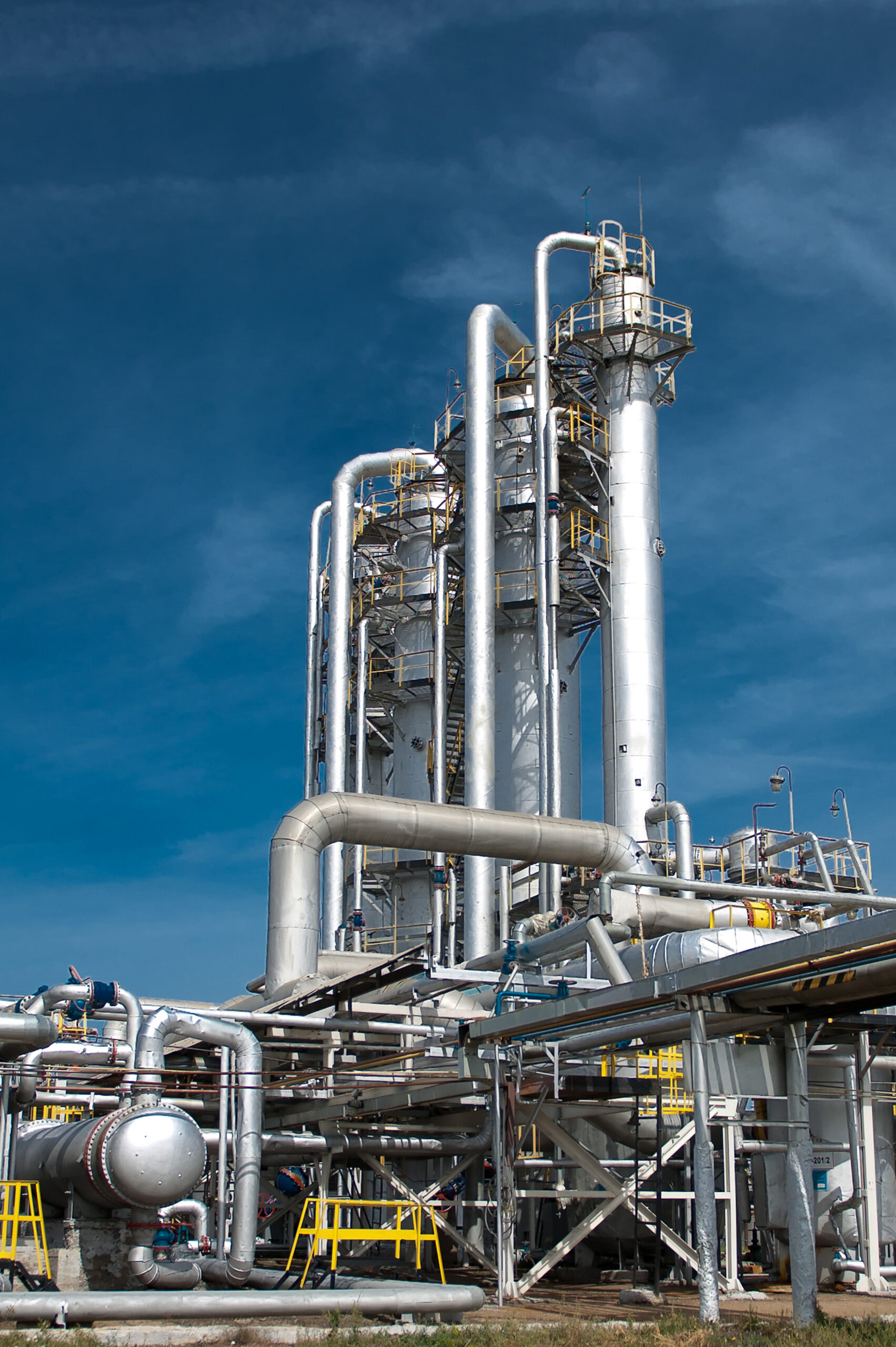
Where Water Dewpoint is Measured in the Process
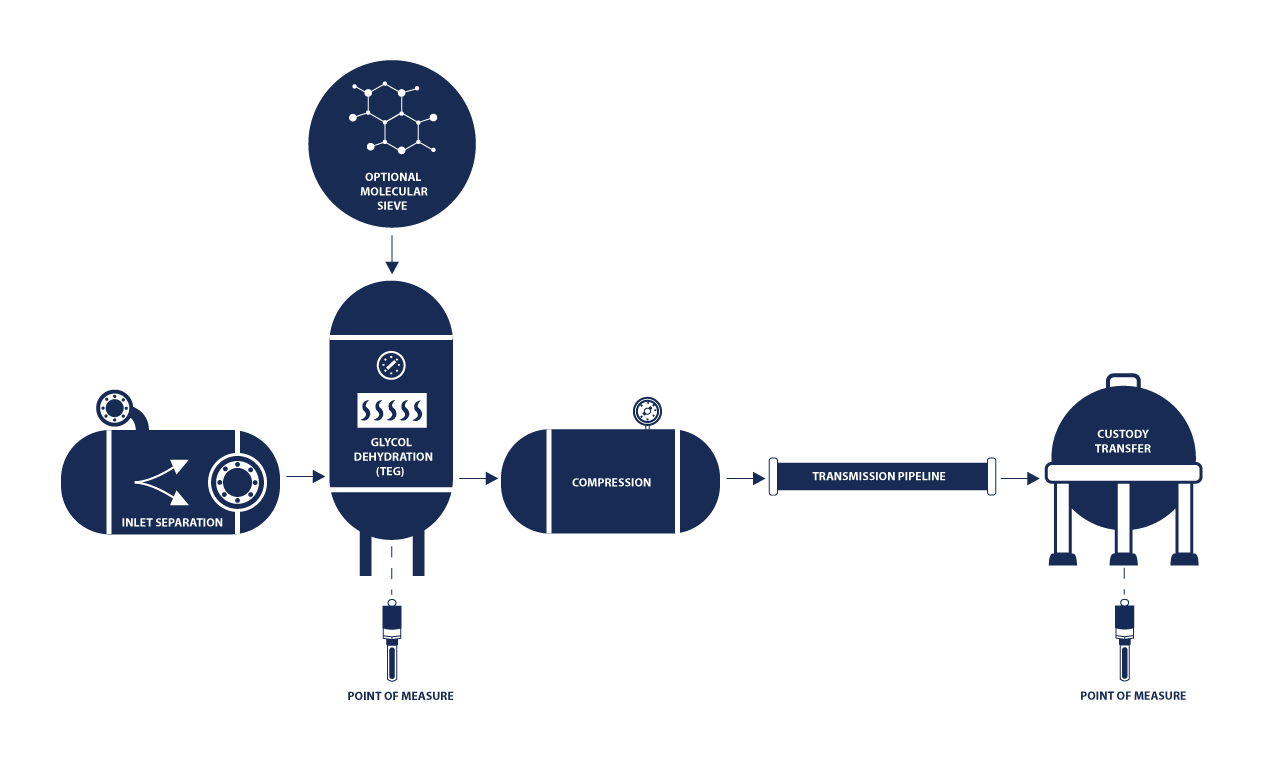
The diagram to the right, (Figure 1) traces gas from the wellhead to the point where custody changes hands. It marks the two places operators check water dewpoint in a typical system.
Everything upstream of the dehydration outlet is common to nearly every natural gas processing scheme. What varies most between sites, however, is how extensive the drying needs to be.
Figure 1. Water dewpoint measurement points in a natural gas processing and transmission system: the dehydration outlet and the custody-transfer point. The molecular sieve stage applies only when operators dry the gas further for cryogenic or NGL processing. The compression and pipeline stages shown apply to every case.
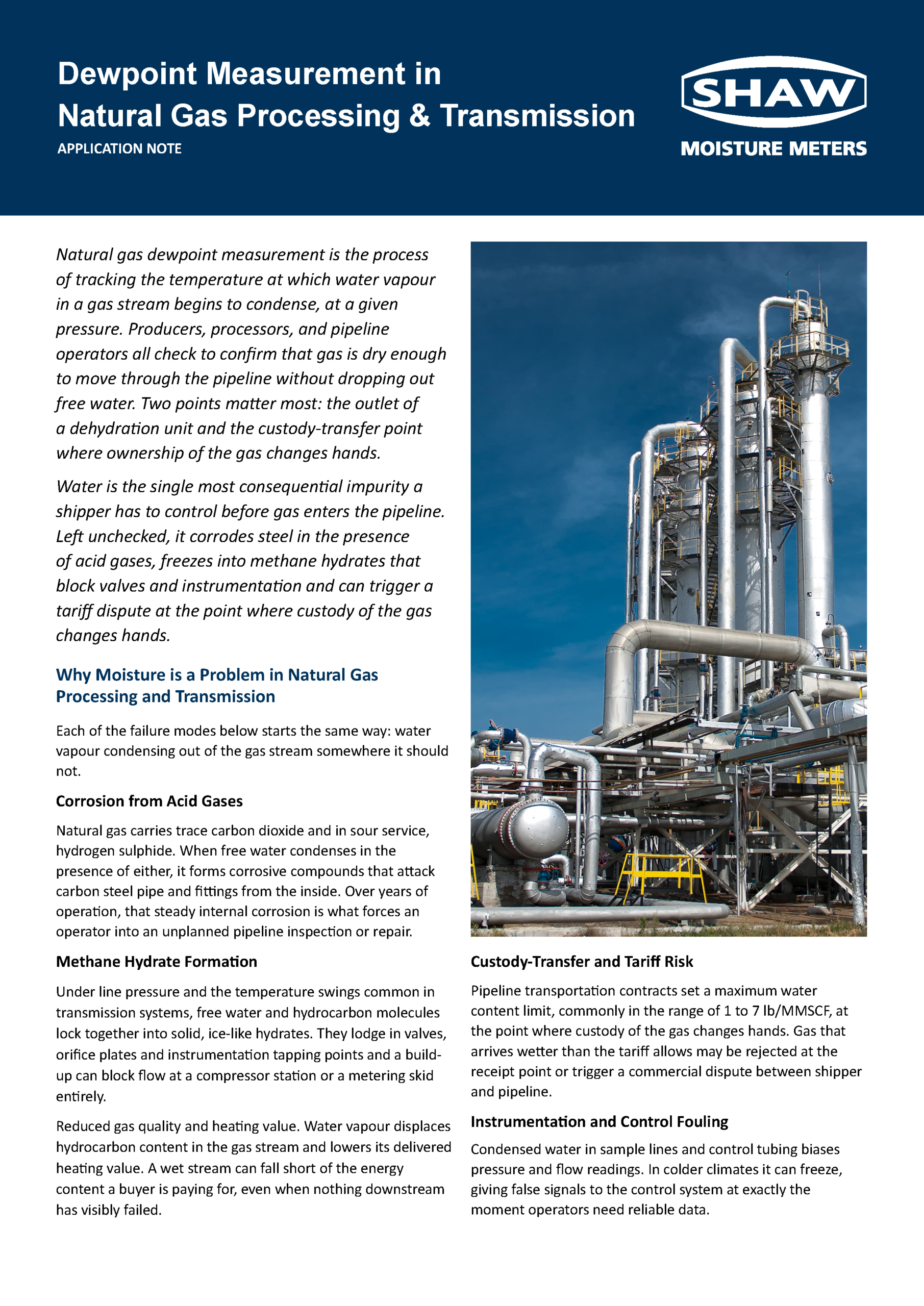
Measuring Water Dewpoint in Natural Gas Pipeline Systems
Water dewpoint vs hydrocarbon dewpoint
Water dewpoint and hydrocarbon dewpoint are not the same measurement and the difference matters when reading an instrument’s output. Water dewpoint is the temperature at which water vapour condenses. Hydrocarbon dewpoint is the temperature at which the heavier hydrocarbon components condense out through retrograde behaviour. This is a separate phenomenon that shows up on a different part of the gas composition. In a rich gas stream the two dewpoints can sit close together. Even so, a water dewpoint transmitter measures water vapour only, so do not read it as a stand in for hydrocarbon liquid dropout. Confusing the two, in fact, is one of the fastest ways to misdiagnose a reading in the field.
Getting an accurate sample
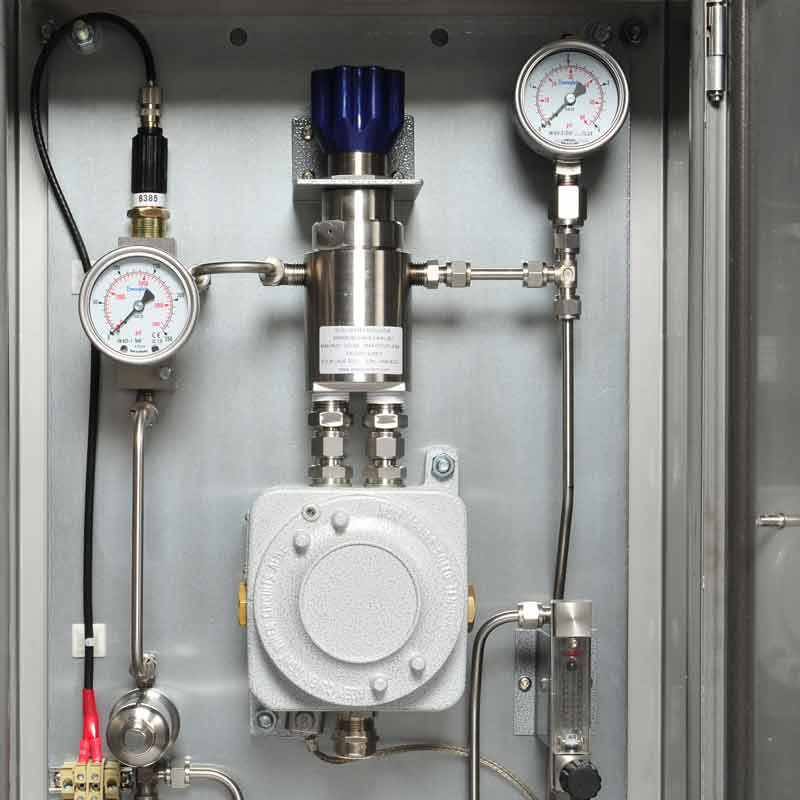
Measure water dewpoint in the vapour phase, at or downstream of a heated pressure reduction stage. Never sample straight off an unconditioned high pressure line. This rule exists because stepping gas down from line pressure to sensor pressure cools it. Unless the pressure reduction stage includes heating, the sample can fall through its own water or hydrocarbon dewpoint before it reaches the sensor. The reading then shows condensation that was never present in the pipeline. As a result, a dry gas stream can look wet on the display. A sample system with a heated regulator, filtration and a controlled flow rate exists specifically to prevent that failure mode.
Typical Locations for Natural Gas Dehydration Monitoring and Custody-Transfer Checks
Dehydration unit outlet
Continuous monitoring here confirms the glycol contactor or the molecular sieve bed where a site has one, is holding its target dewpoint. Comparing this reading against the unit’s design target is the fastest way to catch a slipping contactor or a spent sieve bed.
Custody-transfer and receipt points
A continuous transmitter or a periodic spot-check at sites without one, confirms the gas still meets the pipeline tariff after transport. Operators on both sides of the interconnect often rely on this figure to settle responsibility for an off-spec delivery.
Remote and unmanned stations
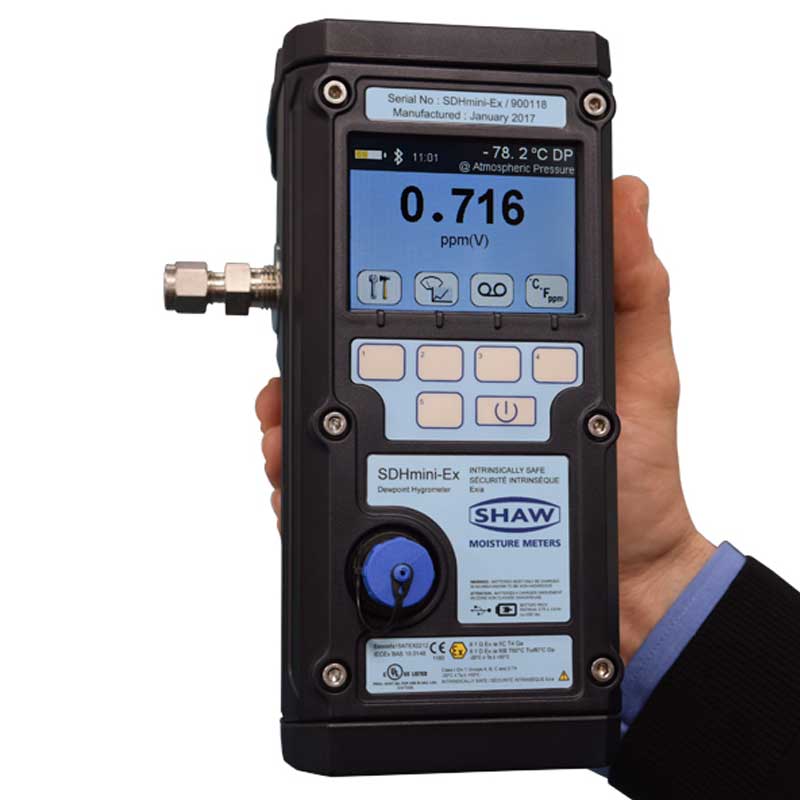
A portable hygrometer lets a technician verify dewpoint during commissioning or troubleshooting without needing a permanent transmitter at every tap along the line. It also gives a new site a documented baseline dewpoint before commissioning a permanent transmitter.
Sensor Technology and Calibration
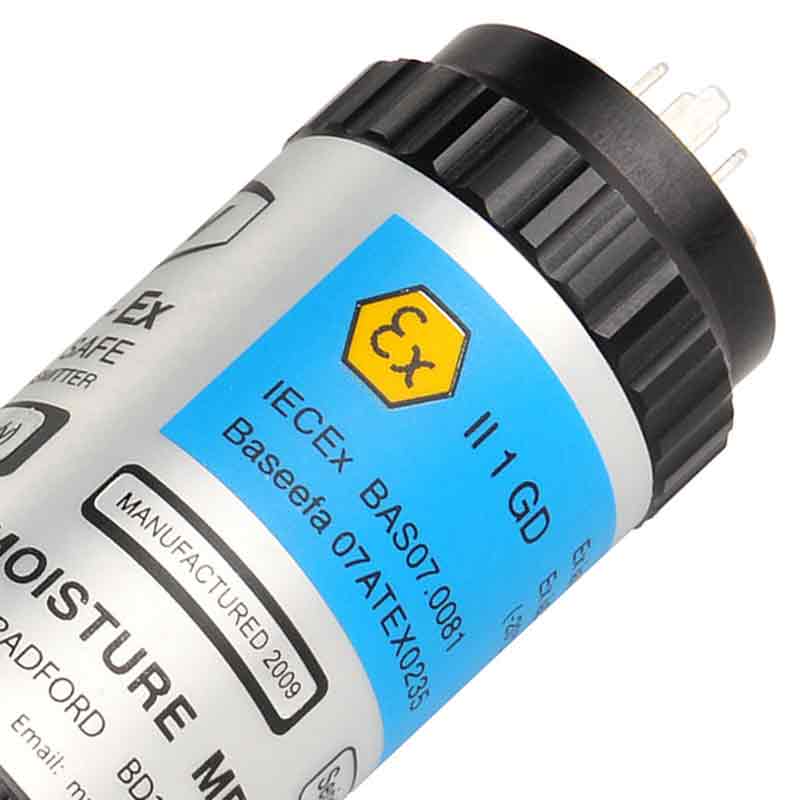
Shaw Moisture Meters high capacitance aluminium oxide sensors suit this duty well, thanks to their accuracy, repeatability and robustness. The same technology works well in both the SDT-Ex inline dewpoint transmitter and the SDHmini-Ex portable dewpoint hygrometer. Technicians can check sensors in the field with a span verification (using the AutoCal function) between calibrations. In addition, Shaw recalibrates them annually, in our head office calibration laboratory, against a traceable humidity standard (NPL).
Accurate water dewpoint measurement, in short, is what keeps a natural gas processing and transmission system free of the corrosion, hydrate blockages and tariff disputes that unmonitored moisture eventually causes. Measuring it in the right place, in the vapour phase, with a properly conditioned sample, is what makes that protection dependable rather than accidental. Get the sampling right and operators can trust the reading at every one of those points.
References to Applicable Standards
The following standards are commonly referenced for natural gas moisture measurement:
- ASTM D5454-11(2020) — Water Vapor Content of Gaseous Fuels Using Electronic Moisture Analyzers. Covers high capacitance aluminium oxide and other electronic sensing cells directly — the category a dewpoint transmitter or portable hygrometer falls into.
- ASTM D1142-95(2021) — Water Vapor Content of Gaseous Fuels by Measurement of Dew-Point Temperature. The chilled-mirror reference method and the source of the water content correlation charts still used across the industry.
- ISO 18453:2004 — Natural gas, correlation between water content and water dew point. The GERG developed method used to convert between the two figures when only one has been measured.
Further Information
Suitable Products
Hand Held Hygrometers
Handheld spot check dewpoint meters for commissioning, troubleshooting and periodic verification at remote or unmanned stations, using the same aluminium oxide sensing technology and AutoCal field-check as the fixed instruments.
SDHmini-Ex
Inline Analyzers
SDT-Ex intrinsically safe dewpoint transmitter for continuous online monitoring for dehydration outlet and custody-transfer points inside a classified hazardous area, wired into a control system on a 4–20 mA loop.
SDT-Ex Dewpoint Transmitter
Sample Systems
SSNGH - Sample conditioning built for line pressure natural gas, with a heated pressure reduction stage, filtration and hazardous area certification, matched to the transmitter or hygrometer in use.
SSNGH Sample System
Service & Calibration
Maintain accuracy and compliance with regular service and calibration
Read more