This application note explains why trace moisture measurement in food packaging is critical for product safety and shelf life.
Trace Moisture Measurement in Food Packaging
APPLICATION NOTE
This application note explains why trace moisture measurement matters in food packaging. In particular, it helps protect product safety and shelf life.
Dewpoint measurement shows whether the nitrogen or compressed air protecting your product is dry enough. However, one measurement point cannot show what happens throughout the entire system. For this reason, check the gas from generation and distribution through to the point of use.
Modified Atmosphere Packaging
Modified atmosphere packaging (MAP) replaces the air inside a package with a protective gas blend. Usually, the blend contains nitrogen, carbon dioxide or both gases. These gases displace oxygen. As a result, they help reduce oxidation and spoilage during storage. Many plants generate nitrogen on site. They usually use a pressure swing adsorption (PSA) or membrane generator. The generator then supplies gas flush manifolds on flow wrap and form fill seal (FFS) lines.
Before reaching the package, the gas travels through the plant’s pipework. Its trace moisture content affects how well it protects the product.
If nitrogen or carbon dioxide carries too much water vapour, it can:
- Promote mould growth
- Contaminate dry ingredients
- Soften textures that should remain crisp
Consequently, excess moisture can undermine the purpose of MAP. Dewpoint identifies the temperature at which water vapour begins to condense. Therefore, it indicates whether the gas is dry enough before it reaches the package.
Why Gas Quality Matters
Nitrogen and compressed air perform several jobs on a packaging line. However, each application also has its own moisture control requirements.
Modified Atmosphere Packaging
Nitrogen and carbon dioxide flush oxygen from the package headspace. In this way, they help prevent the product from oxidising or spoiling on the shelf. Suppliers provide these gases as food additives E941 (nitrogen) and E290 (carbon dioxide). In addition, EIGA Doc 126/20 sets out specifications for food gas applications, including moisture limits.
Direct Product Contact Air
Compressed air may:
- Blows debris from the product
- Convey dry ingredients, such as flour or powders
- Drive cylinders on the packaging machine
Some of this air may contact the product or a product contact surface. Consequently, the plant must assess it against the relevant compressed air quality requirements.
Nitrogen Generator Feed Air
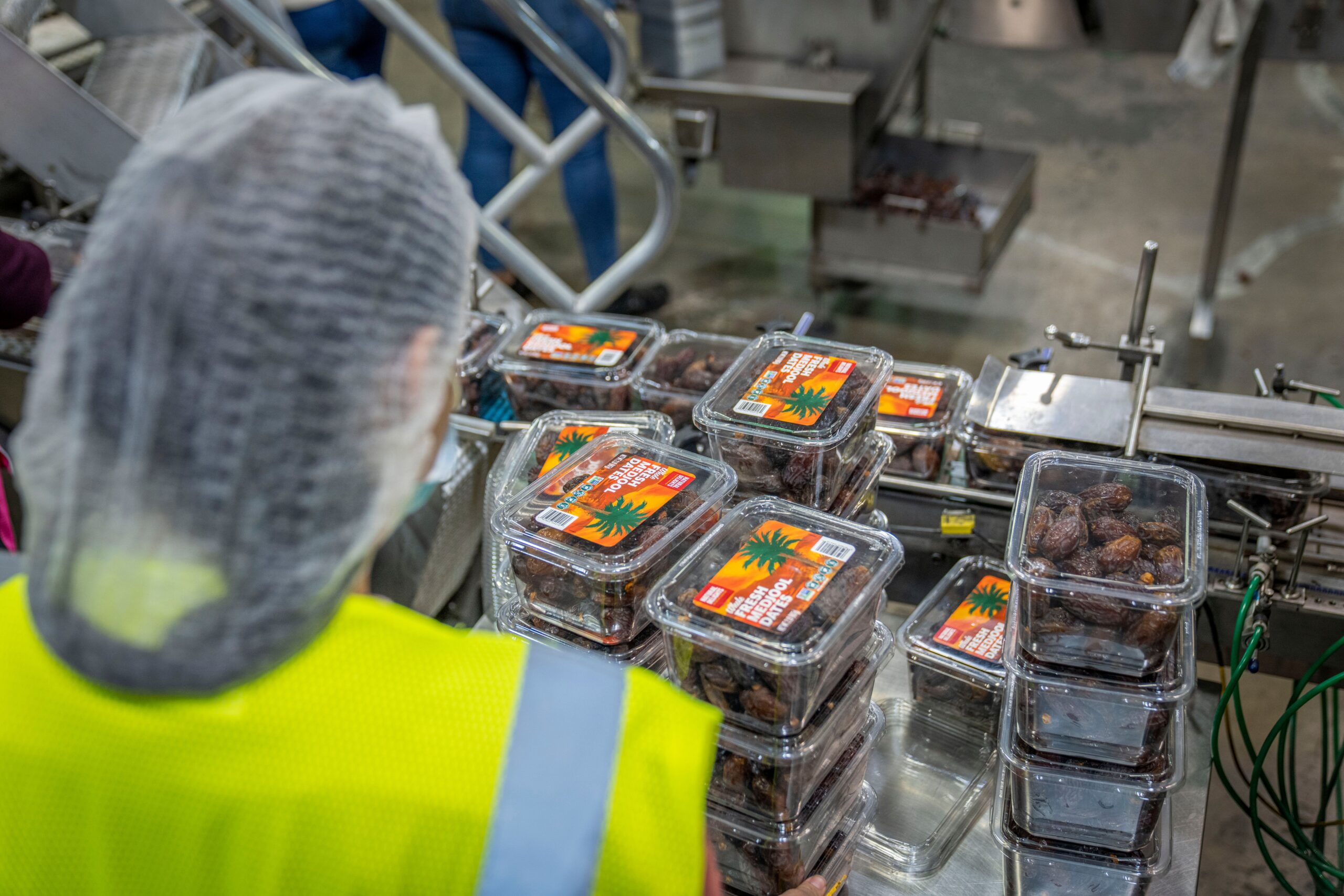
The generator also needs suitably dry feed air. In a PSA system, a carbon molecular sieve (CMS) separates oxygen from nitrogen. If the feed air is wet, this separation process can become less efficient. As a result, the nitrogen may become less pure and less dry. Plants that buy bulk liquid nitrogen do not generate the gas on site. Even so, they still need to complete the downstream checks.
Why Moisture Causes Problems
A gas can show the correct oxygen or carbon dioxide percentage and still contain too much moisture. In many cases, the effects appear after the product leaves the packaging line.
| Risk | Consequence |
|---|---|
| Mould Growth | When local moisture pushes water activity (aw) above roughly 0.85, common mould species can establish themselves. This may cause odours and visible growth inside a pack that looked fine at sealing. |
| Caking and Loss of Flowability | In powdered or granular products, water can bridge fine particles together. Consequently, lumps may block dispensing systems and prevent free flow. |
| Texture and Shelf Life Loss | Snacks and baked goods can absorb moisture over time. Their starch and protein structure then softens, which can reduce crispness before the printed best-before date. |
| Nitrogen Generator Degradation | Wet feed air can reduce the separation efficiency of the CMS. Therefore, the nitrogen supplied to the line may gradually become less pure and less dry. |
Where to Measure Moisture
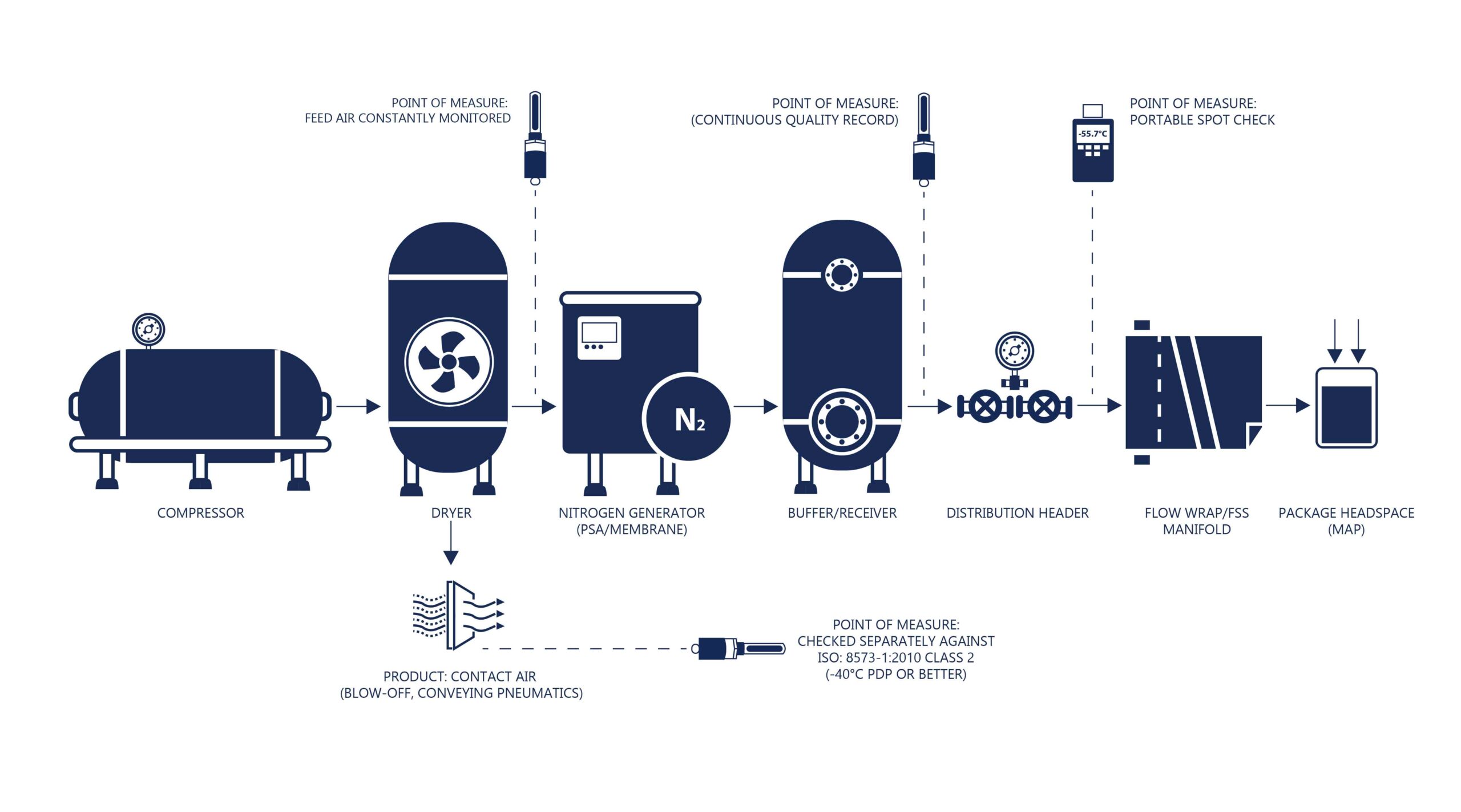
Figure 1. Compressed air and nitrogen path from generation to the packaging line for a site generating nitrogen on site, with dewpoint measurement points marked at the generator feed, the distribution header and the flow wrap manifold. Direct product contact air is checked separately against ISO 8573-1:2010 Class 2.
Measure at more than one point.
A generator reading confirms that the gas was dry at the generator and at that moment. However, it does not confirm that the gas remains dry on its way to the flow-wrap manifold. The distribution route can introduce moisture after the header. For example, moisture can enter through:
- A quick connect coupling
- A hose left open between production runs
- A manifold opened for changeover
In each case, ambient moisture can enter a line that previously read dry at the header. Furthermore, temperature creates another risk. A distribution pipe may pass through a colder area of the plant. When the pipe wall approaches the gas’s pressure dewpoint (PDP), condensation can form inside the pipe. This may happen even when the header read comfortably dry upstream. Therefore, checks at the generator or header alone may miss both problems.
Typical Measurement Locations
Dryer Outlet and Generator Feed Inlet
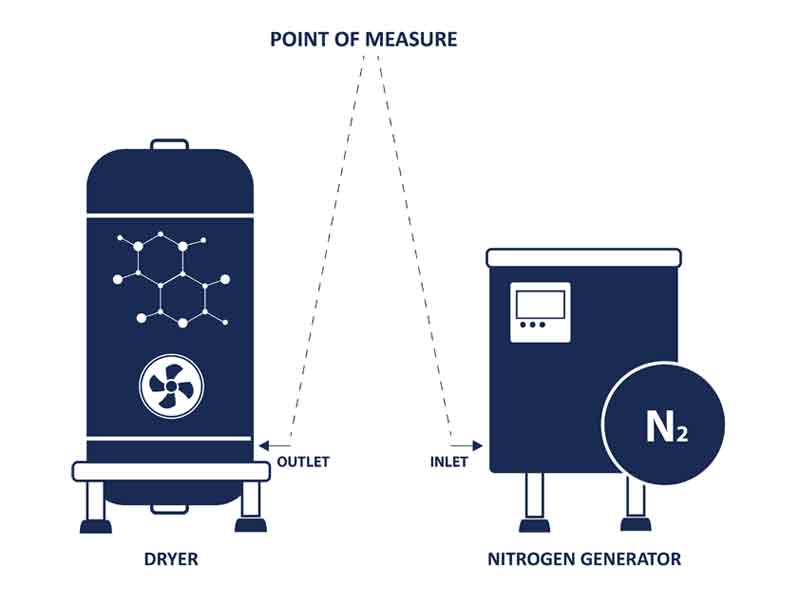
Continuous monitoring can identify a failing refrigeration or desiccant dryer. The plant can then respond before wet air damages the CMS bed. As a result, this protects the generator and helps maintain the purity of the nitrogen delivered downstream.
Nitrogen or CO2 Distribution Header
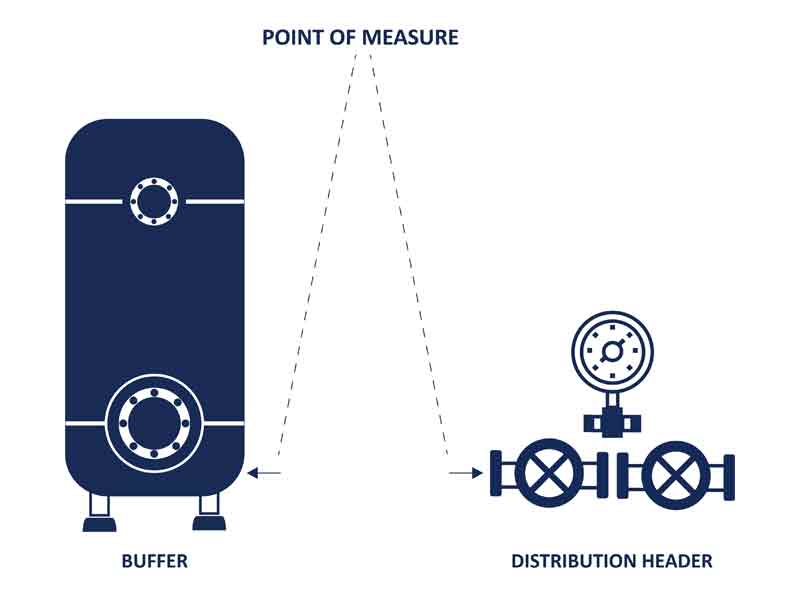
A continuous reading after the buffer receiver provides an ongoing quality record for the packaging hall. It also supports the plant’s process gas monitoring programme. SQF guidance recommends considering moisture testing where moisture presents a potential product risk, including in dry operations.
Individual Flow Wrap or FFS Gas Manifolds
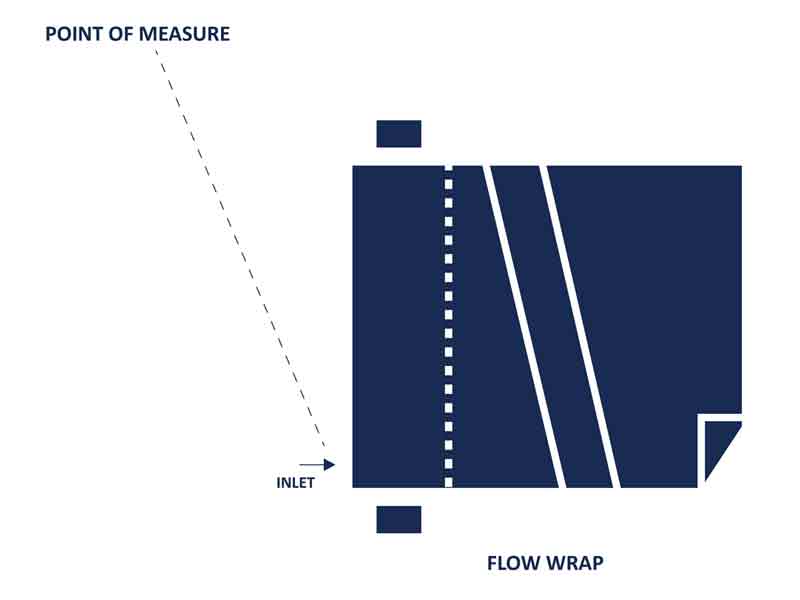
A portable spot check confirms whether the gas remains dry at the point of use. In particular, check:
- After a long or exposed distribution run
- During or after a line changeover
- Where operators regularly open hoses, couplings or manifolds
Direct Product Contact Air
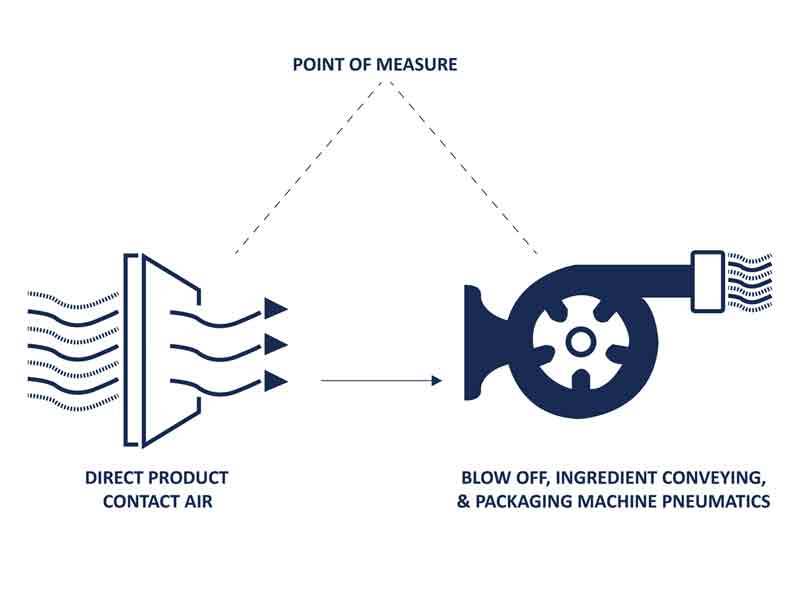
Check blow off air, ingredient conveying air and packaging machine pneumatics that contact the product or product contact surfaces. Where Class 2 applies, the specified pressure dewpoint is -40 °C or better. However, confirm the required class for each application before using this specification.
Dewpoint Instruments
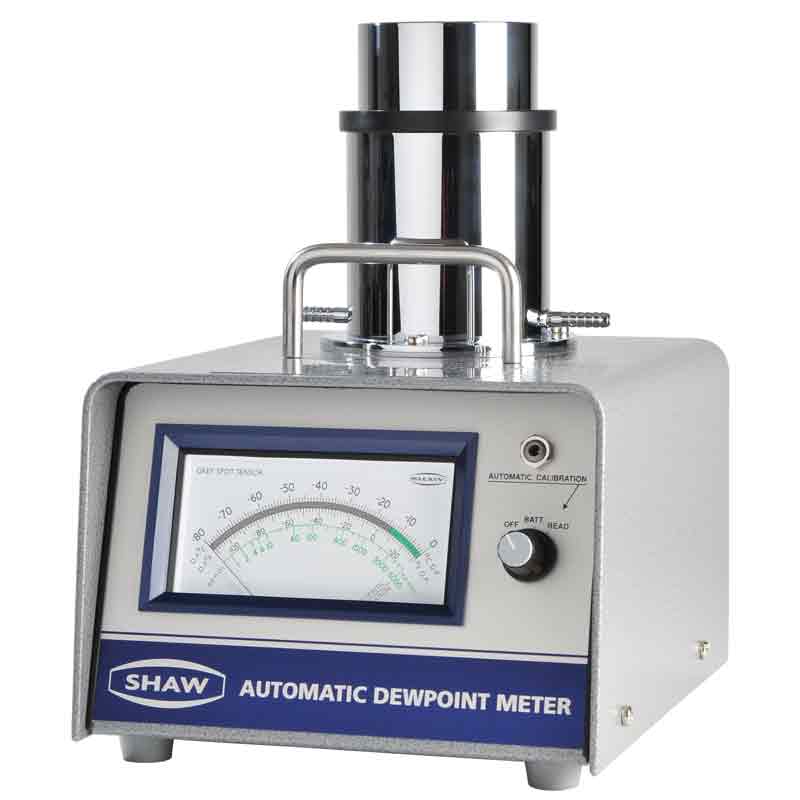
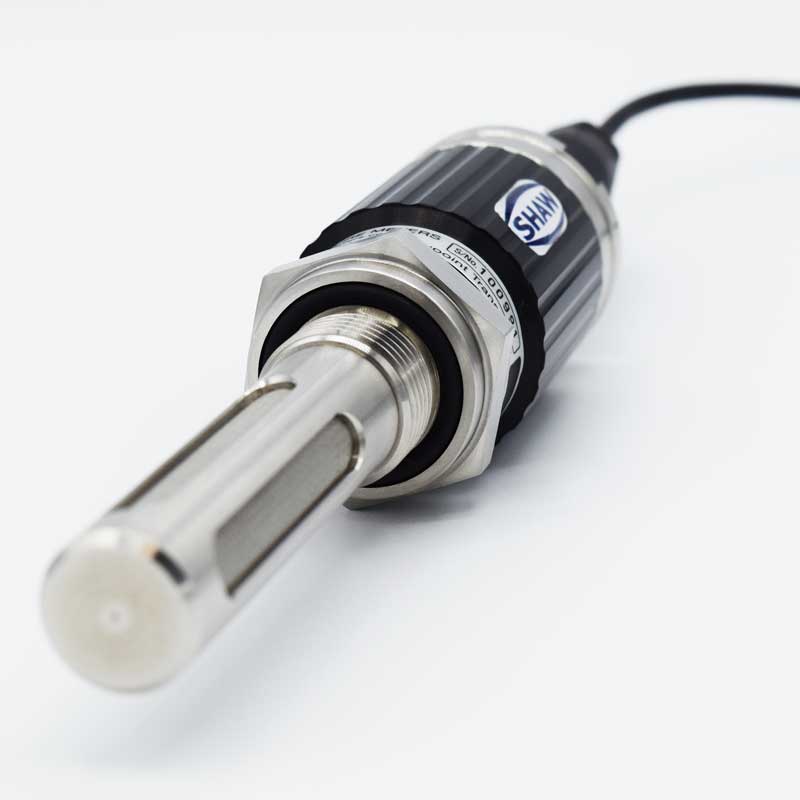
Shaw Moisture Meters’ aluminium oxide dewpoint sensors cover this measurement range with a single sensing technology.
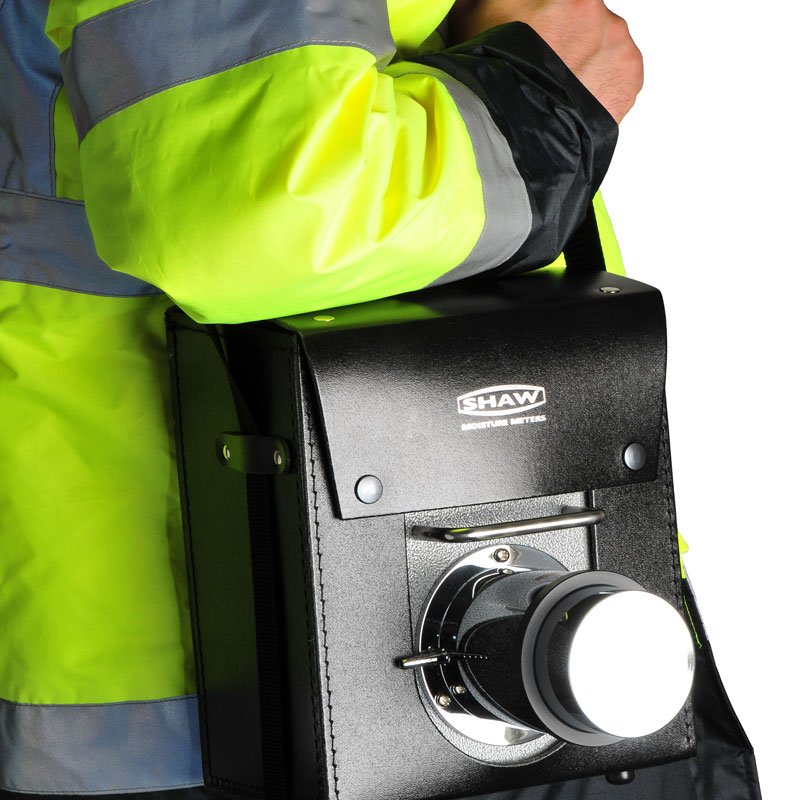
For walk round checks, the desiccant dry down chambers in the portable dewpoint meters provide a fast response. As a result, operators can check several packaging lines during one inspection. Between full laboratory calibrations, AutoCal provides a quick check. In addition, it requires no special equipment.
Accurate dewpoint measurement makes compressed air and nitrogen part of the food safety process. Measuring at the generator, header and point of use provides a clearer view of gas quality. This approach helps identify risks such as mould growth, caking and texture loss. Nevertheless, a single source reading cannot rule out those risks.
Regulatory Standards
ISO 8573-1:2010 covers compressed air purity classes for particles, water and oil. The water classes include the following pressure dewpoint values:
- Class 2: -40 °C or better
- Class 4: +3 °C or better
The correct class depends on the application and its risk controls. Therefore, confirm the required specification before assigning a class to a process.
EIGA Doc 126/20 sets out minimum specifications for food gases. It covers nitrogen (E941) and carbon dioxide (E290), including their moisture limits.
SQF Guidance, Apr 2023 covers air and other gases used in food production. The guidance includes moisture-testing considerations where moisture could affect the product.
By checking several points, food manufacturers can identify moisture risks before they affect the product.
Further Information
Recommended Products
SADP Portable Hygrometer
Intrinsically safe, incorporating AutoCal and desiccant dry-down assembly.
More Information
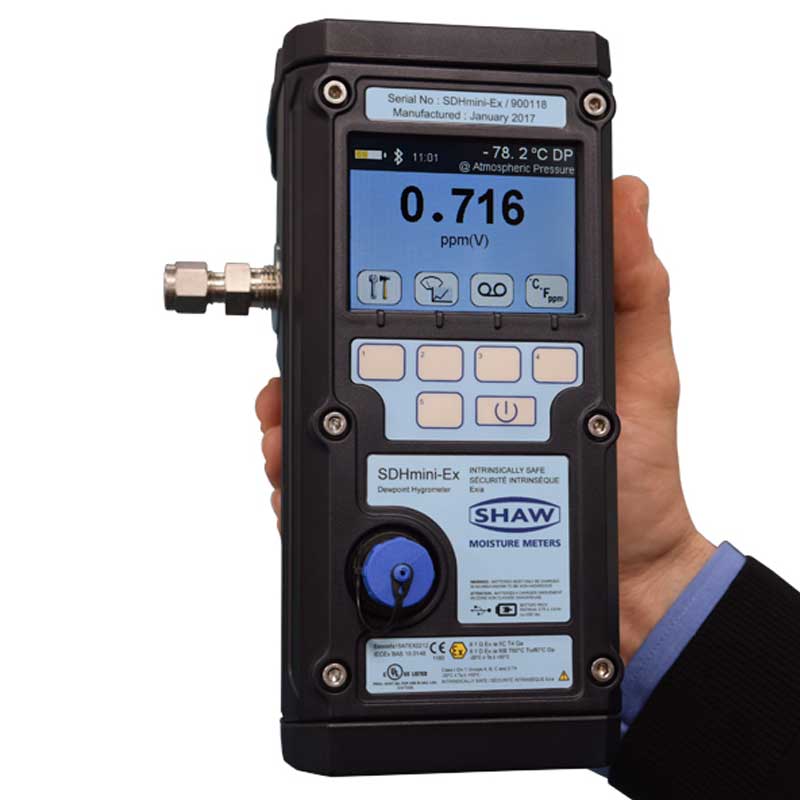
SDHmini-Ex Dew Point Meter
Certified intrinsically safe for quick, reliable spot check measurements of trace moisture
More Information
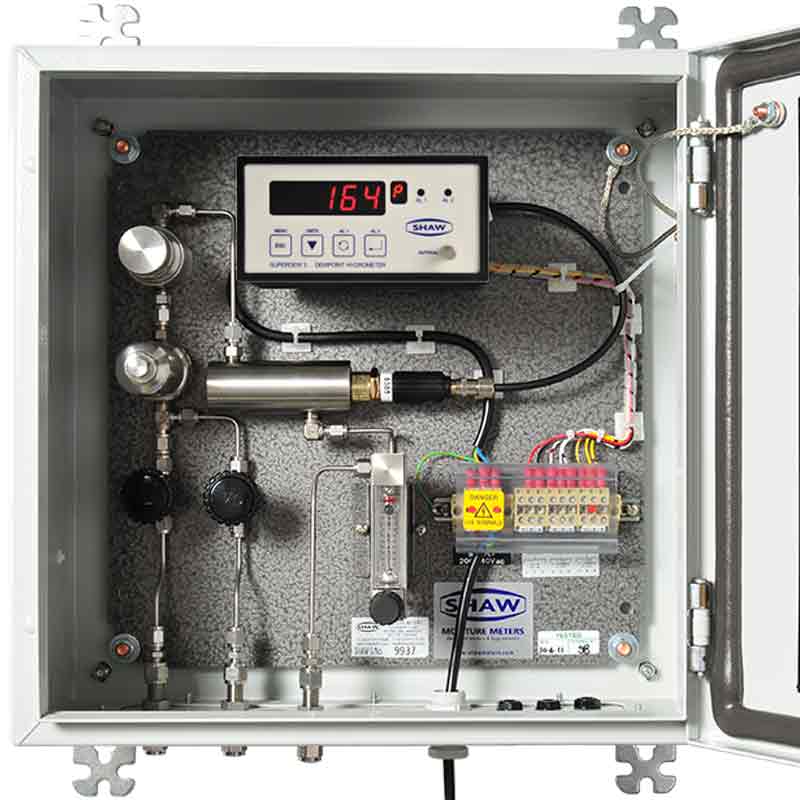
Sample Systems
Provide ideal dewpoint sampling conditions for trace moisture measurement
Sample Systems
Service & Calibration
Have your dewpoint meter serviced and calibrated by the manufacturer.
Service & Calibration