APPLICATION NOTE
Protect polymerisation catalysts, prevent dryer breakthrough and keep polyethylene production on grade
Water at parts per million levels in ethylene feed gas can poison polymerisation catalyst, consume co-catalyst, reduce reactor yield and put resin off grade. Shaw Moisture Meters provides dewpoint meters, hygrometers and inline moisture analysers that help operators detect moisture breakthrough early, before it reaches the reactor.
Why moisture matters in ethylene feed gas
Polymer grade ethylene normally arrives at a polyethylene plant by pipeline or from storage, then passes through feed treaters before entering the reactor. These treaters remove catalyst poisons, including oxygen, carbon monoxide and water. Water is typically removed by 3A molecular sieve dryers, commonly configured as lead and lag beds.
When a lead dryer bed saturates, water can pass through to the lag bed and ultimately, the reactor. Without trace moisture measurement, dryer breakthrough can be difficult to identify from normal process readings. The first indication may be a change in catalyst activity, production rate or resin quality.
The impact of water in ethylene feed
Moisture that passes the feed purification system can affect polyethylene production in several ways:
Catalyst poisoning: Water reduces the activity of Ziegler-Natta, chromium and metallocene catalysts when it reaches their active sites.
Co-catalyst consumption: Water reacts with aluminium-alkyl co-catalysts such as triethylaluminium (TEAL), increasing chemical consumption.
Reduced production rate and off grade resin: Changes in catalyst activity can affect reactor rate, polymer properties and product grade.
Silent dryer breakthrough: A saturated molecular sieve bed can allow water to pass directly through, with little warning from standard process measurements.
Freezing after wet events: Water remaining after hydrotesting or maintenance can freeze as ethylene expands and cools, potentially blocking regulators, instrument lines and analyser sample flow.
Where to measure moisture in ethylene feed gas
Effective moisture monitoring depends on measuring at the right point in the process—not only at the reactor inlet, where water has already arrived.
Battery limit: Measuring incoming ethylene at the battery limit helps confirm that a delivery meets the supply specification before it loads the feed treaters. This can be performed continuously with a dewpoint transmitter or periodically with a portable dewpoint meter.
Lead lag dryer midpoint: The midpoint between the lead and lag dryers is the primary continuous measurement point. A rising moisture trend here can indicate lead bed breakthrough while the lag bed is still protecting the reactor, giving operators time to switch beds and begin regeneration.
Reactor feed header: Measurement after the full treater train provides final assurance that the ethylene entering the reactor is within the required moisture limit. It can also identify water being introduced downstream of the lag bed.
After regeneration, changeout or maintenance: A freshly regenerated dryer bed can return to service wet if cooling or purging has been incomplete. A portable intrinsically safe hygrometer can be used to spot check the bed outlet before it returns to service.
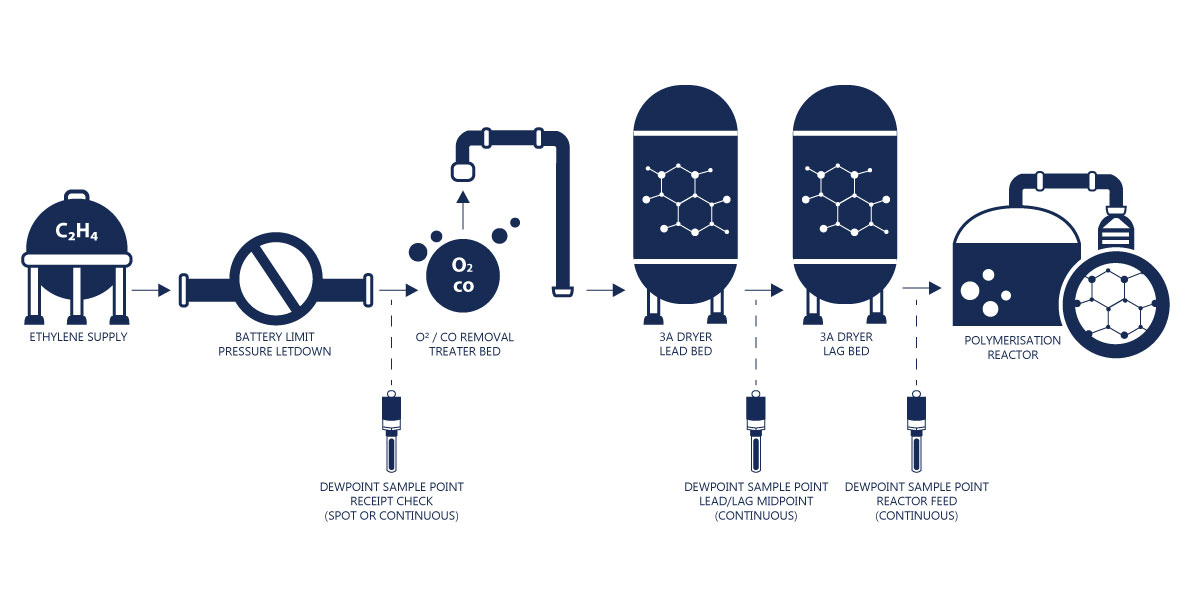
Figure 1. Ethylene feed purification train at a polyethylene plant, with typical dewpoint measurement points, receipt check, lead lag midpoint and reactor feed. The path is the treated feed. The order and number of oxygen and CO removal stages vary by plant; spot checks after dryer regeneration are covered in the text.
Measuring trace moisture accurately
Polymer grade ethylene is commonly specified at around 1 ppm(v) water or below, while molecular sieve drying can reduce moisture to below 0.1 ppm(v). At atmospheric pressure, these levels correspond approximately to frost points of -76 °C and -90 °C respectively. Because pressure affects the indicated dewpoint, sample pressure should always be recorded alongside the measurement.
Shaw instruments use aluminium oxide capacitance sensors to measure trace water vapour in ethylene feed gas. Water vapour adsorbs into the porous sensor oxide, changing its capacitance in proportion to water vapour partial pressure. This enables measurement to below -100 °C dewpoint, with ±2 °C dewpoint accuracy.
Recommended practice
For reliable results in ethylene service:
- Measure between the lead and lag dryers to identify breakthrough early
- Sample in the vapour phase
- Heat the pressure reduction stage to prevent condensation
- Use short stainless-steel sample lines
- Purge new or disturbed sample lines and allow the reading to stabilise
- Route vents to flare or another safe location
- Use intrinsically safe equipment in Zone 1 or Zone 2 ethylene areas
Intrinsically safe measurement for hazardous areas
Ethylene is classified as a Group IIB gas and analyser locations are commonly Zone 1 or Zone 2 hazardous areas. Shaw offers intrinsically safe dewpoint transmitters and portable hygrometers designed for use in these environments.
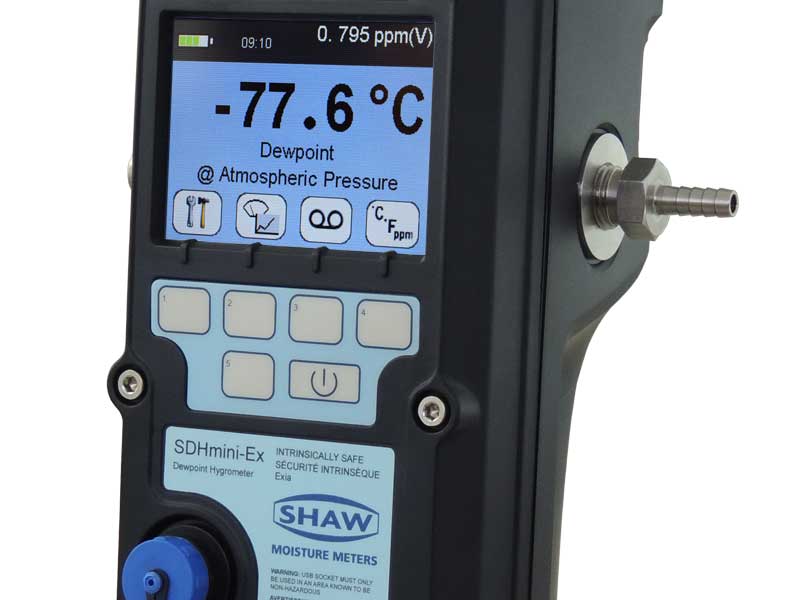
SDHmini-Ex handheld hygrometer
The SDHmini-Ex handheld hygrometer includes an AutoCal field check between scheduled laboratory calibrations, helping operators maintain confidence in trace moisture readings. Its desiccant dry down assembly keeps the sensor dry between checks, reducing the wait for a stable reading at very low moisture levels.
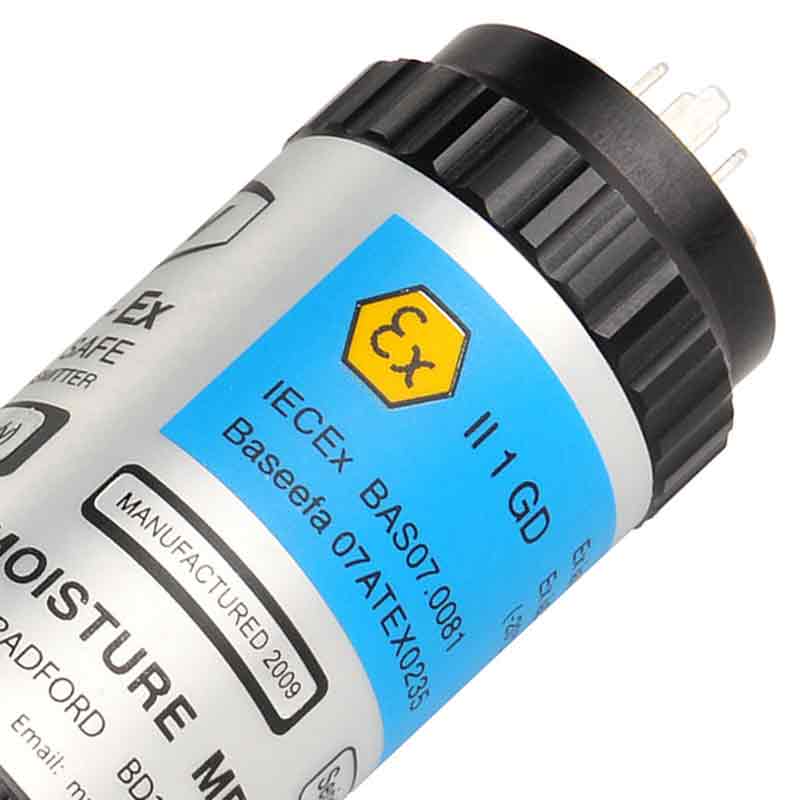
Certified intrinsically safe to ATEX, IECEx and UL standards for hazardous areas, the SDHmini-Ex covers a dewpoint range of -100 to +20 °C and includes selectable units: °C, °F, ppm and lb/MMSCF. Other features include a full colour display, a rechargeable battery lasting over 150 hours, data logging of up to 300,000 readings, USB and Bluetooth connectivity and menus in ten languages.
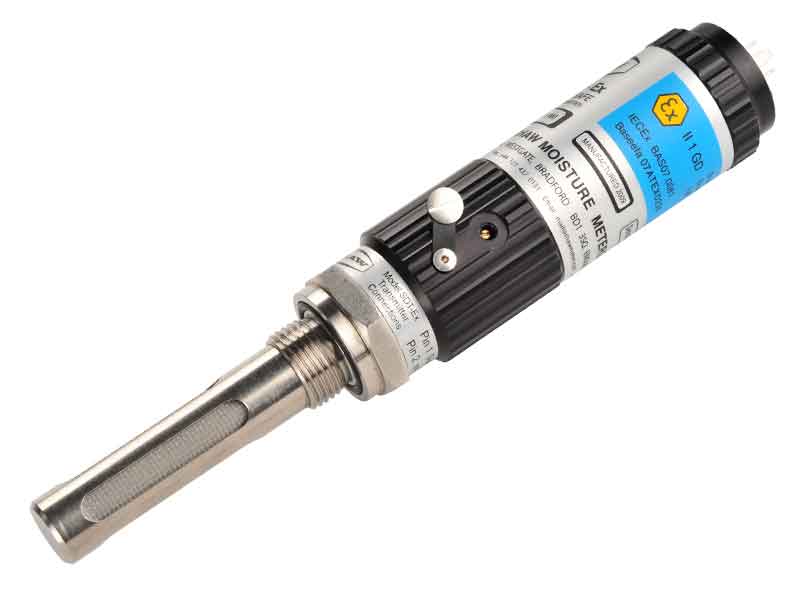
SDT-Ex dewpoint transmitter
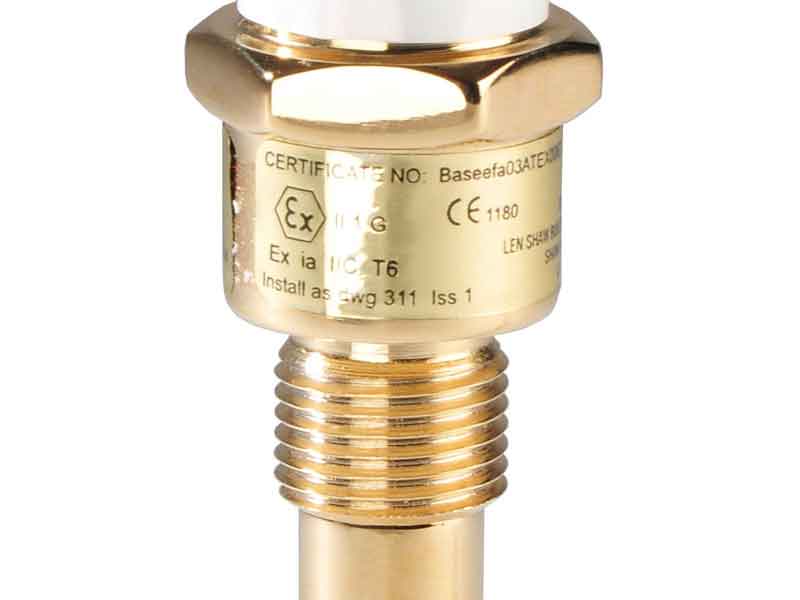
The SDT-Ex is a compact, 3 wire dewpoint transmitter suitable for continuous measurement of compressed air and process gases. Certified intrinsically safe to ATEX and IECEx standards (with a signal isolator) with no loss of signal over a 1,000 m cable run.
It covers -100 to +20 °C dewpoint with output configurable in °C, °F, ppm(v), g/m³ and lb/MMSCF. It also includes AutoCal, open/short circuit detection and an IP66/NEMA 4X housing.
Calibration and traceability
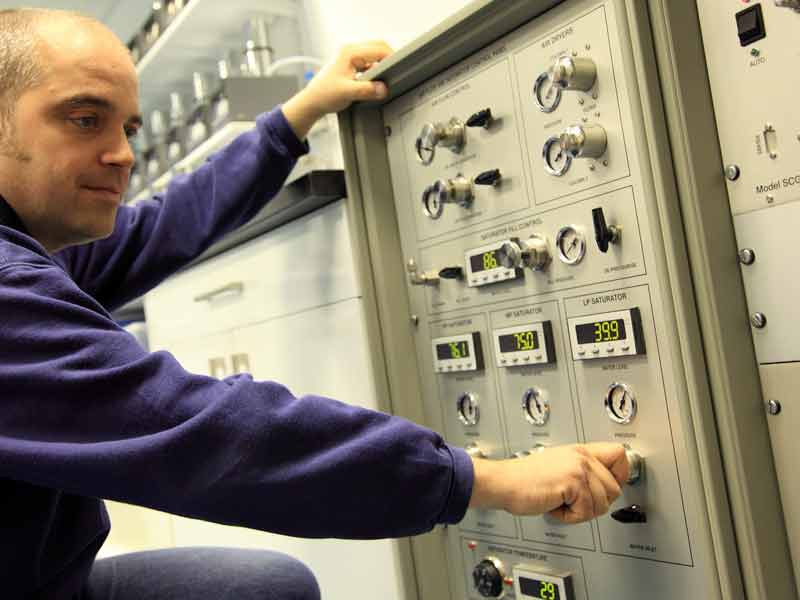
All Shaw sensors require periodic recalibration, as sensor ageing and contamination affect accuracy over time. Every sensor is supplied with a calibration certificate traceable to national and international humidity standards.
Shaw calibrates in a controlled laboratory and UK customers can choose onsite calibration to reduce downtime. Servicing, repairs and commissioning are also provided under an accredited quality system, which helps customers maintain traceable records throughout the instrument lifecycle.
Relevant standards
The full application note references standards including:
ASTM D5234-92(2025): Standard Guide for Analysis of Ethylene Product
ISO 7382:2023: Ethylene for industrial use: Sampling in the liquid and gaseous phase
ASTM D5454-11(2020): Standard Test Method for Water Vapor Content of Gaseous Fuels Using Electronic Moisture Analyzers
IEC 60079-11:2023: Explosive atmospheres: Equipment protection by intrinsic safety “i”
Further Information
Learn how to select measurement points, avoid sampling errors, interpret dewpoint readings at trace levels and turn dryer breakthrough into a planned bed change.
Recommended Products
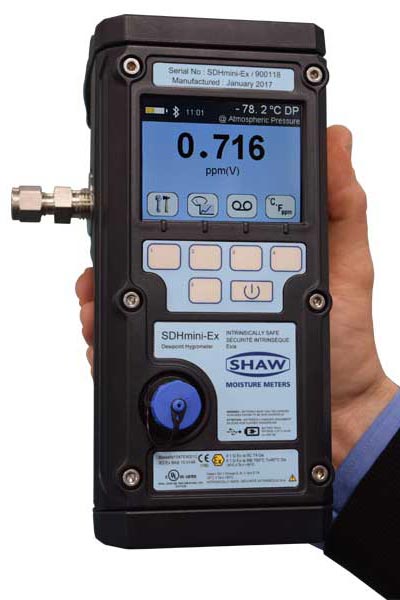
SDHmini-Ex Dewpoint Meter
Certified intrinsically safe for quick, reliable spot check measurements of trace moisture
More Information